Marl in Dust Real
2022, Sound Performance
Sculpture Museum Glaskasten, Marl
May 2022, thanks to: Georg Elben, HPP Architects, City of Marl
By playing this video, personal data may be transmitted to third-party providers.
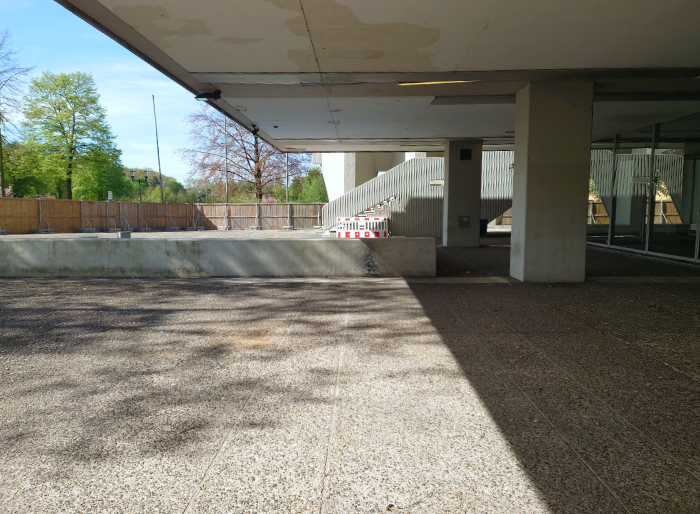
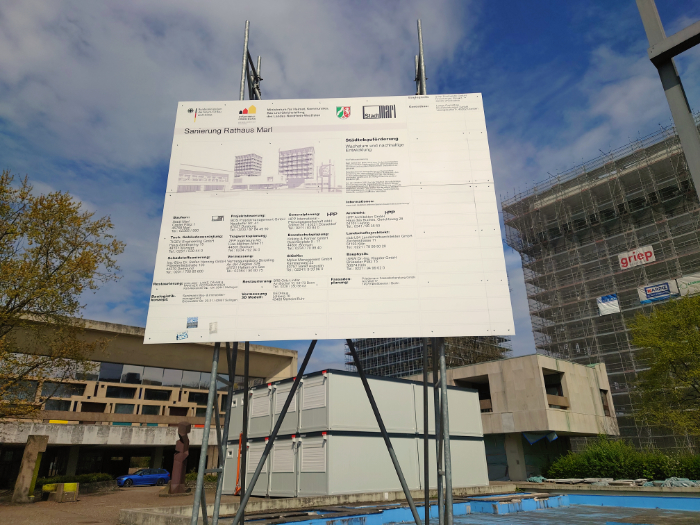
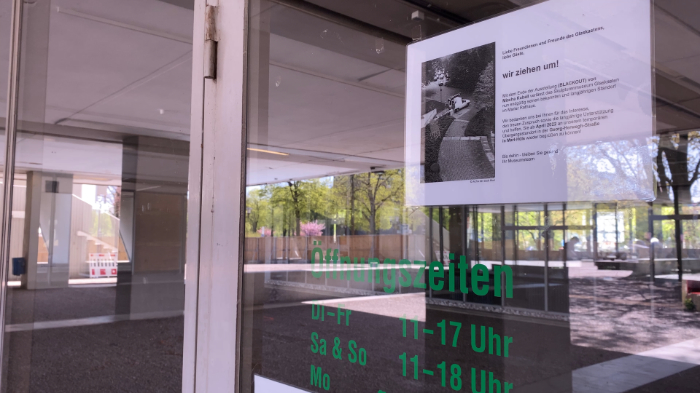
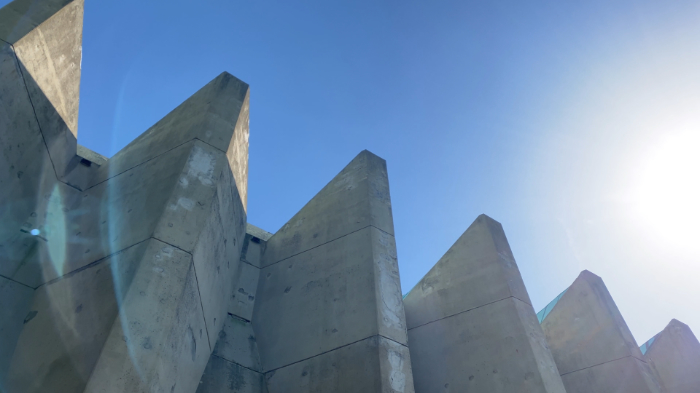
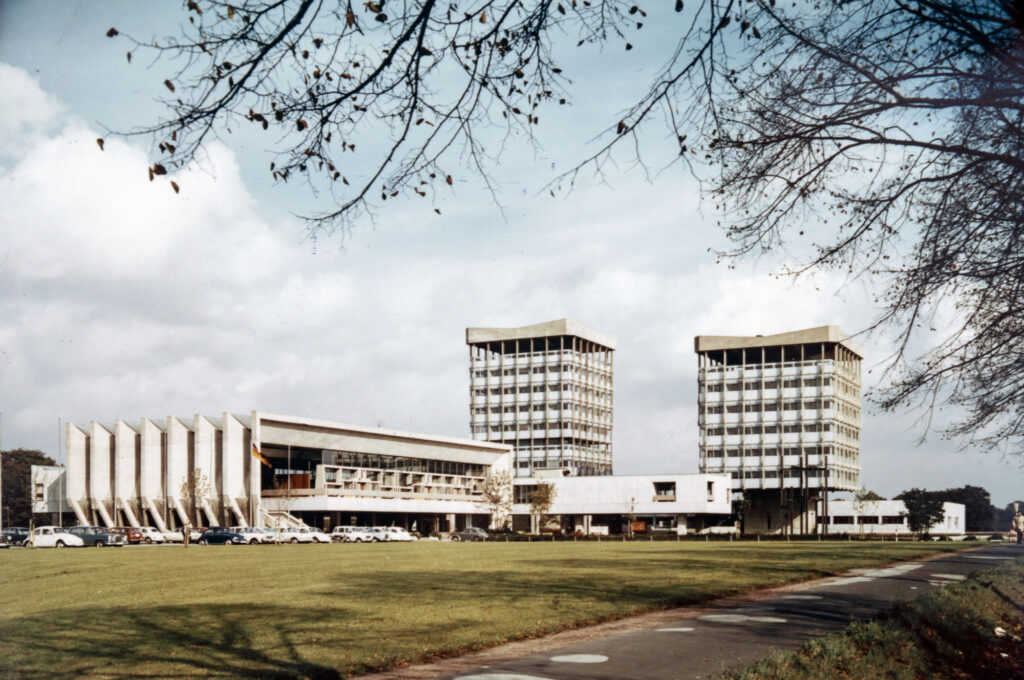
In 2022, the Skulpturenmuseum Glaskasten Marl moved to a new location. The original building complex, a striking example of Brutalist architecture, is currently being renovated and converted. The museum’s collection will no longer return to this location.
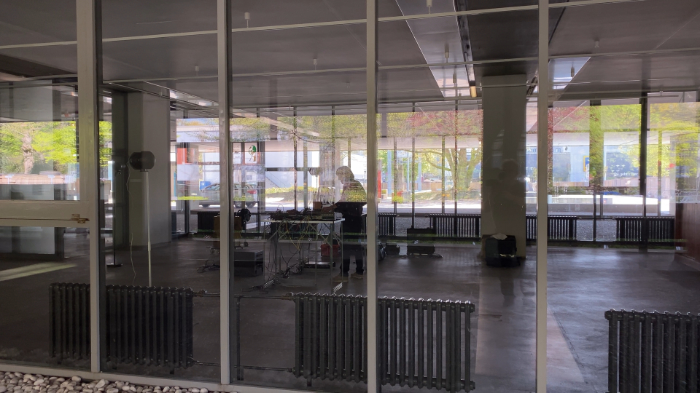
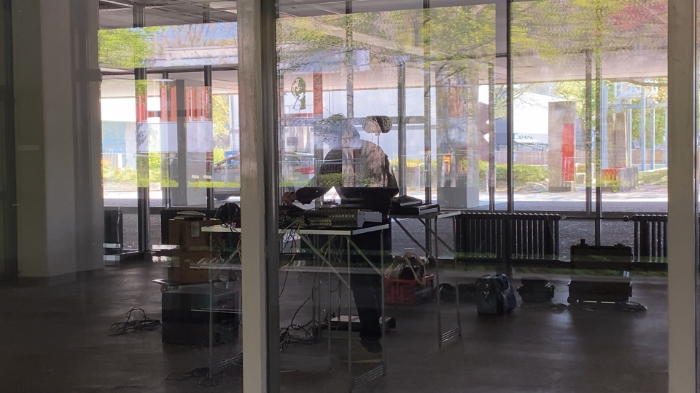
With my sound art project, I was able to pay homage to the former museum building before it finally changed its form and function. I realized two sound art experiments in the empty former exhibition spaces – an acoustic inventory and an acoustic fingerprint of the place, edited and archived for the future.
The Skulpturenmuseum Glaskasten Marl is known for its contemporary sculpture collection, which showcases international positions in modern and contemporary art. The building itself, a glass and steel cube with brutalist elements, has a decisive influence on the room acoustics: solid concrete surfaces, clear geometric structures and open volumes create a special resonance that had a decisive influence on the sound project.
Experimental set-up 1: Electronic sound sculpture
The first experimental set-up consists of sounds introduced into the room.
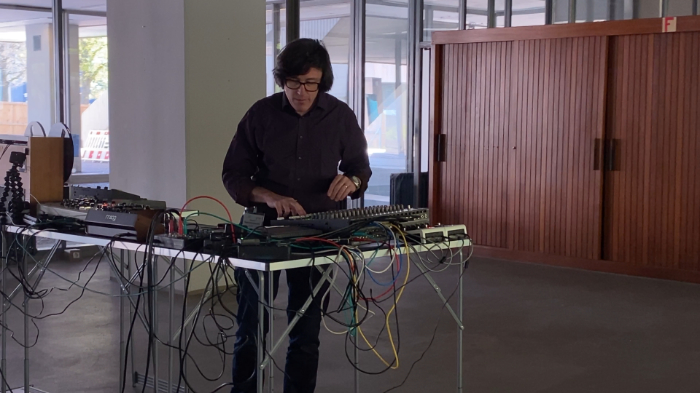
These are electronically modeled sounds that are moved through the empty rooms. The selection of electronic instruments is based on an initial idea, but the final decision is made on site.
My work forms a sculpture made of sound that is temporarily positioned in the rooms.
The electronic sound takes on the role of the sculpture here – a changeable, kinetic sculpture that moves through the brutalist structures and interacts with them.
By playing this video, personal data may be transmitted to third-party providers.
Experimental set-up 2: The room as a sound instrument
In the second experimental set-up, I worked with the room itself.
I recorded existing sounds from inside and outside, amplified them and played them back into the room. This resulted in feedback, which I worked on specifically.
With the specific frequencies and standing waves that resulted from the solid concrete material, I made the entire room vibrate.
Depending on the location and material, different frequency ranges stood out. The audible sounds moved through the walls and floor – the Brutalist material itself became my instruments.
So the room could literally hear itself.
By playing this video, personal data may be transmitted to third-party providers.